How Artificial Intelligence Is Used in Healthcare
Discover how artificial intelligence is used in healthcare to support diagnosis, medical imaging, patient care, drug discovery, hospital management, and personalized treatment while improving efficiency and decision-making.

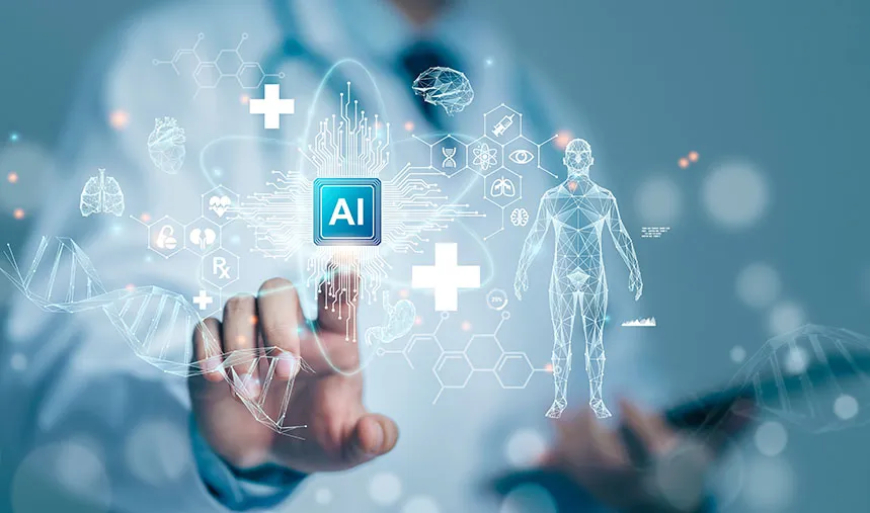
How Artificial Intelligence Is Used in Healthcare
Artificial intelligence is becoming an increasingly important technology in modern healthcare. Hospitals, medical researchers, healthcare professionals, and technology companies are using AI to analyze information, recognize patterns, support clinical decisions, and improve the delivery of healthcare services.
Healthcare generates enormous amounts of information every day. Medical images, laboratory results, electronic health records, research papers, patient histories, and other forms of data can be difficult to analyze manually. Artificial intelligence can help process this information and identify patterns that may otherwise take significant time to discover.
AI is not designed to replace doctors and other healthcare professionals. Instead, its main value comes from supporting professionals and helping them make more informed decisions.
What Is Artificial Intelligence in Healthcare?
Artificial intelligence in healthcare refers to the use of AI technologies to perform tasks that traditionally require human intelligence.
These technologies can analyze medical data, recognize patterns, classify information, generate predictions, and assist healthcare professionals with different tasks.
AI applications can be found in areas such as:
- Medical imaging
- Disease detection
- Patient monitoring
- Drug discovery
- Medical research
- Healthcare administration
- Personalized medicine
- Clinical decision support
- Hospital management
The exact role of AI depends on the healthcare application and the type of data being processed.
AI in Medical Diagnosis
One of the most promising uses of artificial intelligence in healthcare is supporting medical diagnosis.
AI systems can analyze large datasets and identify patterns associated with particular diseases or medical conditions. When used appropriately, these systems can help healthcare professionals evaluate information more efficiently.
For example, an AI system may analyze certain patient data and highlight findings that deserve additional attention.
The final diagnosis should still involve qualified healthcare professionals. AI can provide additional information, but medical decisions require professional judgment and consideration of the patient's complete situation.
Artificial Intelligence in Medical Imaging
Medical imaging produces large amounts of visual information. X-rays, CT scans, MRI scans, and other imaging techniques are commonly used to help doctors identify and evaluate health conditions.
AI systems can analyze medical images and identify patterns that may be difficult or time-consuming to detect manually.
For example, AI-assisted imaging tools can help identify areas that may require closer examination. This can potentially support radiologists and other specialists by prioritizing images or highlighting unusual findings.
AI therefore acts as an additional analytical tool rather than an independent replacement for medical professionals.
AI for Early Disease Detection
Early detection can be important for many medical conditions. Artificial intelligence can analyze information and identify patterns associated with potential health risks.
AI may be used to examine medical records, laboratory results, imaging data, or other information to help identify patients who may require further evaluation.
The ability to process large amounts of information quickly makes AI particularly useful in environments where healthcare professionals have to manage significant volumes of data.
Personalized Healthcare
Patients do not always respond to treatments in exactly the same way. Factors such as age, medical history, lifestyle, genetics, and other characteristics can influence healthcare outcomes.
Artificial intelligence can analyze multiple types of information to support more personalized approaches to healthcare.
This can help healthcare professionals consider individual patient characteristics when evaluating possible treatment options.
Personalized healthcare is a developing field, and AI is becoming an important technology for analyzing the large datasets required to support it.
AI in Drug Discovery
Developing a new medicine can take many years and requires extensive research and testing.
Artificial intelligence can help researchers analyze large collections of biological and chemical information. It can be used to identify potential drug candidates, examine molecular interactions, and support the early stages of pharmaceutical research.
By helping researchers process information more efficiently, AI may contribute to faster discovery and development processes.
However, AI-generated findings still need to be evaluated through scientific research, laboratory testing, and appropriate clinical studies.
Artificial Intelligence in Medical Research
Medical research produces huge quantities of data. Researchers need to analyze information from clinical studies, scientific publications, genetic databases, and other sources.
AI can assist researchers by finding patterns and relationships within large datasets.
It can also help organize information, identify relevant research, and support data analysis.
This can make some research processes more efficient and allow scientists to focus more time on interpreting results and developing new ideas.
AI and Patient Monitoring
Artificial intelligence can also support patient monitoring.
AI-powered systems can analyze information collected from medical devices and monitoring equipment. In some settings, these systems can identify unusual changes that may require attention.
Wearable devices can also collect information such as activity levels and other health-related measurements. AI can help analyze these datasets and identify patterns over time.
This can contribute to more continuous approaches to healthcare, although the reliability and clinical usefulness of any particular measurement depend on the technology being used.
AI in Healthcare Administration
Not every application of AI in healthcare directly involves diagnosis or treatment.
Hospitals and healthcare organizations also deal with administrative tasks that can consume considerable amounts of time.
AI can assist with:
- Appointment scheduling
- Document processing
- Data organization
- Administrative communication
- Billing-related processes
- Resource planning
- Workflow management
Automating repetitive administrative tasks can allow healthcare employees to spend more time on activities that require human interaction and professional judgment.
AI-Powered Virtual Health Assistants
AI assistants can provide patients with basic information and help them navigate healthcare services.
For example, a digital assistant may help users find information about appointments, explain general healthcare instructions, or direct them toward appropriate services.
However, AI assistants should not be treated as a substitute for professional medical diagnosis or emergency care.
When a health issue is serious, urgent, or unclear, patients should seek appropriate medical attention rather than relying solely on an automated system.
AI and Remote Healthcare
The growth of telemedicine has created new opportunities for artificial intelligence.
AI can assist remote healthcare services by organizing patient information, supporting communication, and analyzing certain types of health data.
For patients who live far from healthcare facilities, digital technologies can make access to certain healthcare services more convenient.
AI can become part of this broader digital healthcare infrastructure by helping professionals manage and interpret information.
Benefits of AI in Healthcare
The use of artificial intelligence can provide several potential benefits.
Faster Data Analysis
AI can process large amounts of information quickly, helping professionals find relevant patterns and information.
Support for Healthcare Professionals
AI can provide additional analytical support and help professionals evaluate complex datasets.
Improved Efficiency
Automation can reduce the time required for repetitive administrative and analytical tasks.
Earlier Identification of Potential Problems
Some AI systems can help identify patterns that may warrant further investigation.
Support for Medical Research
Researchers can use AI to analyze large datasets and explore new possibilities in medicine and biotechnology.
Challenges of Artificial Intelligence in Healthcare
Despite its potential, AI in healthcare also creates important challenges.
Accuracy and Reliability
An AI system can make mistakes. Healthcare organizations need to carefully validate AI technologies before relying on their outputs.
Patient Privacy
Healthcare data is highly sensitive. Organizations must use appropriate security and privacy practices when handling patient information.
Bias in AI Systems
If training data does not adequately represent different populations, AI systems may produce less reliable results for certain groups.
Lack of Human Context
AI can analyze data, but it does not fully understand a patient's personal circumstances, emotions, or broader social context in the same way a healthcare professional can.
Responsibility and Regulation
Healthcare organizations need clear processes for determining how AI recommendations are reviewed and who remains responsible for medical decisions.
Why Doctors and Healthcare Professionals Remain Important
The growing use of AI does not eliminate the need for doctors, nurses, technicians, researchers, and other healthcare professionals.
Medical care involves much more than analyzing data. Professionals communicate with patients, understand individual circumstances, evaluate symptoms, consider risks, and make decisions based on clinical experience.
AI can provide useful information, but healthcare professionals are responsible for interpreting that information within the broader clinical context.
The strongest healthcare systems are therefore likely to combine artificial intelligence with human expertise.
The Future of AI in Healthcare
Artificial intelligence is likely to become more integrated into healthcare as technology improves and more applications are evaluated.
Future AI systems may become better at analyzing different types of medical information simultaneously, supporting clinical workflows, and assisting researchers with increasingly complex problems.
The future will also require stronger standards for privacy, safety, transparency, validation, and responsible AI development.
Rather than replacing healthcare professionals, AI is more likely to become an additional tool that helps them work with large amounts of information and deliver more efficient services.
What's Your Reaction?
 Like
0
Like
0
 Dislike
0
Dislike
0
 Love
0
Love
0
 Funny
0
Funny
0
 Angry
0
Angry
0
 Sad
0
Sad
0
 Wow
0
Wow
0