The Most Important Innovations Changing the World
Explore the most important innovations changing the world, from artificial intelligence and renewable energy to robotics, biotechnology, advanced computing, and smart technologies.


The Most Important Innovations Changing the World
Innovation has always played an important role in human progress. From the wheel and printing press to electricity and the internet, major innovations have changed how people live, work, communicate, and solve problems.
Today, technological development is moving at an extraordinary pace. Artificial intelligence, renewable energy, biotechnology, robotics, advanced computing, and connected devices are creating new possibilities across almost every industry.
Some of these innovations are already part of everyday life, while others are still developing. Together, they have the potential to influence the future of society, business, healthcare, transportation, and the environment.
Artificial Intelligence
Artificial intelligence is one of the most influential innovations of the modern era. AI systems can process large amounts of information, recognize patterns, understand language, generate content, and assist with complex tasks.
AI is already being used in search engines, recommendation systems, customer service, cybersecurity, education, healthcare, and business operations.
Generative AI has expanded these capabilities by allowing software to produce text, images, audio, software code, and other forms of digital content.
As AI becomes more capable, organizations are exploring how it can improve productivity and automate repetitive tasks. At the same time, responsible development will be essential to address issues such as privacy, accuracy, security, and transparency.
Renewable Energy Technologies
The transition toward cleaner energy is another important area of innovation.
Solar panels, wind turbines, energy storage systems, and smart electrical grids are developing rapidly. Improvements in battery technology are particularly important because energy storage can help balance electricity supply and demand.
Renewable energy innovations can help reduce dependence on fossil fuels and support more sustainable energy systems.
The development of more efficient batteries may also accelerate the adoption of electric vehicles and other technologies that depend on stored electricity.
Electric Vehicles
Electric vehicles have transformed the automotive industry. Unlike conventional vehicles that rely on internal combustion engines, electric vehicles use electric motors powered by batteries or other electrical systems.
Modern EVs are becoming more practical as battery technology improves. Charging infrastructure is also expanding in many regions.
Beyond passenger cars, electrification is being explored for buses, delivery vehicles, trucks, and other forms of transportation.
Electric mobility could contribute to reduced local emissions and create new opportunities for automotive innovation.
Biotechnology and Genetic Research
Biotechnology combines biological knowledge with technological tools to develop new solutions in areas such as medicine, agriculture, and environmental science.
Advances in genetic research have improved scientists' ability to understand biological systems and investigate potential treatments for certain diseases.
Biotechnology is also being used to develop improved crops, biological materials, laboratory technologies, and other applications.
As these technologies develop, ethical considerations, safety standards, and responsible research will remain important.
Robotics
Robotics is changing how machines interact with the physical world.
Industrial robots are already widely used for manufacturing, assembly, packaging, and inspection. New generations of robots are becoming more capable of operating in dynamic environments.
Robotics is also being explored in healthcare, logistics, agriculture, research, and household applications.
When combined with artificial intelligence and advanced sensors, robots can perform increasingly complex tasks.
The future of robotics may involve greater cooperation between humans and machines, particularly for dangerous, repetitive, or physically demanding work.
Advanced Computing
Computing technology continues to become faster, smaller, and more efficient.
Modern processors provide enormous computing capabilities compared with earlier generations of computers. Advanced chips are particularly important for artificial intelligence, cloud computing, gaming, scientific research, and mobile devices.
Another promising area is quantum computing. Quantum computers use different computational principles from traditional computers and may eventually help solve certain highly complex problems.
Although quantum computing is still developing, it represents an important area of research with potential applications in science, optimization, materials research, and cryptography.
The Internet of Things
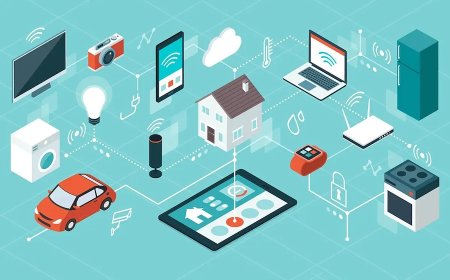
The Internet of Things, or IoT, connects physical devices to digital networks.
Smart thermostats, wearable devices, connected vehicles, industrial sensors, security systems, and smart appliances are examples of IoT technology.
These devices can collect and exchange data, allowing systems to monitor environments and automate certain processes.
IoT technology can help businesses improve efficiency and allow households to create more convenient smart environments. However, increasing connectivity also makes cybersecurity and privacy important considerations.
Advanced Medical Technology
Medical innovation is helping healthcare professionals diagnose, monitor, and treat patients in increasingly sophisticated ways.
Digital medical records, advanced imaging, robotic systems, wearable devices, and telemedicine are examples of technologies influencing healthcare.
Artificial intelligence can also assist with analyzing medical information and identifying patterns that may be difficult to detect manually.
Future developments may make healthcare more personalized and accessible, although medical technology must always be developed and used with appropriate professional oversight.
3D Printing
3D printing has changed how certain products and components can be designed and manufactured.
Traditional manufacturing often requires specialized equipment and production processes. 3D printing can create physical objects layer by layer from digital designs.
The technology is used in manufacturing, engineering, education, architecture, healthcare, and prototyping.
One important advantage is the ability to create customized objects without necessarily requiring large-scale production facilities.
As 3D printing technology improves, it could become increasingly useful for local manufacturing and specialized products.
Advanced Communication Networks
Modern society depends heavily on fast and reliable communication networks.
Mobile network technologies continue to improve speed, capacity, and responsiveness. These developments support smartphones, connected devices, remote collaboration, streaming, cloud services, and emerging technologies.
Future communication systems could enable even greater connectivity between people, machines, vehicles, and infrastructure.
Better connectivity may also help expand access to digital services in areas where traditional communication infrastructure is limited.
Smart Cities
Smart city technologies combine sensors, connected infrastructure, data analysis, and automation to improve urban services.
Cities can use technology to monitor traffic, manage energy consumption, improve public transportation, monitor environmental conditions, and optimize infrastructure.
For example, intelligent traffic systems can analyze road conditions and adjust traffic management strategies.
Smart city development can make urban environments more efficient, but it also raises questions about data privacy, surveillance, cybersecurity, and equitable access to technology.
Sustainable Materials and Manufacturing
Innovation is also changing how products are designed and manufactured.
Researchers and businesses are developing materials that may reduce waste, use fewer resources, or provide alternatives to traditional materials.
Recycling technologies and more efficient manufacturing processes can help reduce environmental impact.
The development of sustainable materials could become increasingly important as industries look for ways to balance economic growth with environmental responsibility.
The Role of Innovation in Education
Technology is changing education by creating new ways to access and share knowledge.
Online learning platforms, digital classrooms, interactive applications, educational simulations, and AI-powered learning tools can provide students with additional resources.
These technologies can make learning more flexible and accessible, particularly for people who cannot easily attend traditional educational institutions.
The most effective educational innovation will likely combine technology with strong teaching methods rather than relying on technology alone.
How Innovation Is Changing the Workplace
Automation, artificial intelligence, cloud computing, and digital collaboration tools are changing professional environments.
Employees can work remotely, collaborate across borders, analyze large datasets, and automate repetitive processes.
While some job responsibilities may become automated, technological innovation can also create new professions and industries.
The ability to learn new skills and adapt to technological change will therefore remain increasingly important.
Challenges of Technological Innovation
Innovation brings opportunities, but it can also create challenges.
New technologies may raise questions about privacy, cybersecurity, employment, environmental impact, and social inequality. Some innovations can also be expensive or difficult to implement.
Responsible innovation requires consideration of both benefits and potential risks.
Governments, businesses, researchers, and communities all have a role to play in ensuring that new technologies are developed and used in ways that provide meaningful benefits to society.
What Does the Future of Innovation Look Like?
Future innovation is likely to involve the combination of multiple technologies rather than the development of isolated products.
Artificial intelligence may work together with robotics, advanced sensors, cloud computing, and connected devices. Renewable energy systems may combine advanced batteries with smart electrical networks.
This technological convergence could produce solutions that are significantly more capable than individual technologies working alone.
The most important innovations of the future may therefore be those that solve real-world problems while remaining accessible, secure, sustainable, and practical.
What's Your Reaction?
 Like
0
Like
0
 Dislike
0
Dislike
0
 Love
0
Love
0
 Funny
0
Funny
0
 Angry
0
Angry
0
 Sad
0
Sad
0
 Wow
0
Wow
0