How Smart Technology Is Becoming Part of Everyday Life
Discover how smart technology is becoming part of everyday life through smart homes, smartphones, wearable devices, connected appliances, AI assistants, smart transportation, and the Internet of Things.

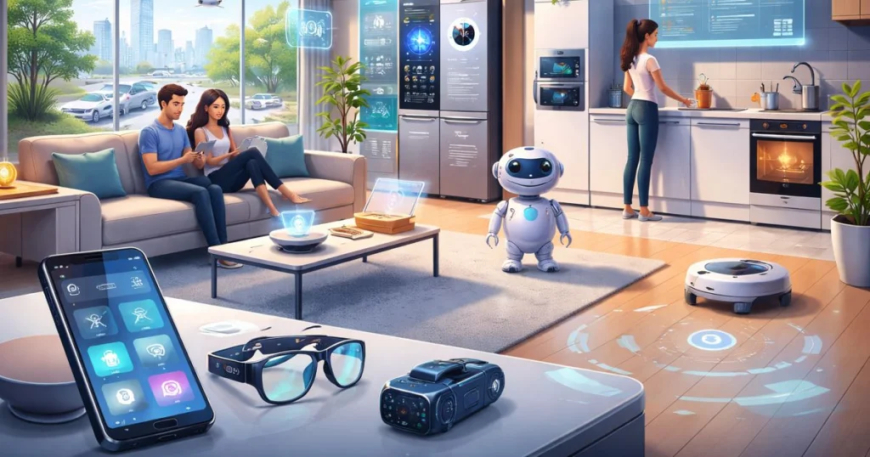
How Smart Technology Is Becoming Part of Everyday Life
Smart technology is becoming an increasingly important part of modern life. Devices that can connect to the internet, collect information, communicate with other systems, and respond to user commands are now common in homes, workplaces, vehicles, and public spaces.
Smartphones, smartwatches, connected appliances, smart televisions, security cameras, voice assistants, and smart home systems are examples of technologies that have moved from being specialized products to everyday tools.
The growth of artificial intelligence and the Internet of Things is making these devices even more capable. Instead of simply responding to commands, some smart systems can analyze information and automatically adapt to changing conditions.
What Is Smart Technology?
Smart technology generally refers to digital devices and systems that can collect data, communicate with other devices, and perform actions based on information or user instructions.
A traditional light switch simply turns a light on or off. A smart lighting system can be controlled through a smartphone, follow a schedule, respond to sensors, or communicate with other devices.
Similarly, a conventional thermostat requires manual adjustment, while a smart thermostat can use sensors and programmed settings to manage indoor temperatures automatically.
This combination of connectivity, sensors, software, and automation is what makes many modern devices "smart."
Smart Technology in Smartphones
Smartphones are perhaps the most familiar example of smart technology.
A modern smartphone combines computing power, internet connectivity, cameras, sensors, GPS, wireless communication, and artificial intelligence features in a single device.
People use smartphones for communication, navigation, banking, shopping, entertainment, photography, education, and work.
Smartphone applications can also communicate with other devices. For example, a phone can control smart lights, connect to wireless headphones, monitor a smartwatch, or display information from a home security system.
Smart Homes Are Becoming More Common
Smart home technology is changing how people interact with their homes.
Connected lights, thermostats, doorbells, security cameras, speakers, televisions, and appliances can communicate through a home network.
A homeowner can use a smartphone to control lighting or check a security camera while away from home. Some systems can also automate routine activities based on schedules or sensor information.
For example, smart lights can turn on at a specific time, while a smart thermostat can adjust the temperature according to programmed settings.
The goal is often to make homes more convenient, efficient, and responsive.
Smart Appliances
Household appliances are also becoming connected.
Smart washing machines, refrigerators, ovens, coffee makers, and other appliances can include internet connectivity and digital controls.
A connected appliance may send notifications to a smartphone or allow users to monitor its status remotely.
For example, a smart washing machine could notify the user when a cycle has finished. A connected refrigerator may provide information about its temperature or send alerts when certain conditions change.
These features can make routine household activities easier to manage.
Wearable Technology
Wearable devices have become another important part of smart technology.
Smartwatches and fitness trackers can collect information about physical activity, sleep patterns, heart rate, and other measurable data, depending on the device and its capabilities.
They can also display notifications, support communication, provide navigation, and connect with smartphones.
Wearables are useful because they allow digital information to remain accessible without requiring users to constantly check their phones.
However, users should understand what information their devices collect and review privacy settings carefully.
Smart Speakers and Voice Assistants
Smart speakers have introduced voice-based interaction into many homes.
Users can ask voice assistants to provide information, set reminders, control compatible devices, play music, or perform other supported tasks.
Voice control can be particularly convenient when users are cooking, working, or otherwise unable to interact with a screen.
As artificial intelligence improves, voice assistants may become better at understanding natural language and handling more complex requests.
Smart Entertainment
Entertainment systems are becoming increasingly connected.
Smart televisions can provide access to streaming services, online applications, games, and digital content without requiring separate devices for every function.
Wireless speakers and headphones can connect to smartphones, computers, televisions, and other devices.
Modern entertainment systems can also communicate with smart home platforms, allowing users to control different devices from a central interface.
Smart Technology in Transportation
Smart technology is also changing transportation.
Modern vehicles increasingly include navigation systems, digital dashboards, cameras, sensors, connectivity features, and driver-assistance technologies.
Navigation applications can analyze traffic conditions and recommend alternative routes. Connected vehicles may provide information about maintenance, vehicle status, and driving conditions.
Public transportation systems are also becoming more digital. Mobile ticketing, real-time arrival information, and transportation applications can make travel more convenient.
The Internet of Things
The Internet of Things, commonly known as IoT, is one of the technologies supporting the growth of smart devices.
IoT refers to physical devices that can connect to networks and exchange information.
A smart thermostat, security camera, wearable device, connected vehicle, or industrial sensor can be part of an IoT ecosystem.
The more devices become connected, the more opportunities exist for automation and data-driven services.
For example, sensors can collect information about temperature, movement, energy consumption, or equipment performance and send that information to software for analysis.
Artificial Intelligence Makes Devices Smarter
Artificial intelligence is helping connected devices become more useful.
A basic connected device may simply send information to an application. An AI-powered system can analyze information and potentially identify patterns or make recommendations.
For example, an intelligent home system may learn common routines and adjust certain settings based on user preferences.
AI can also improve voice recognition, image processing, recommendation systems, and automated customer services.
The combination of AI and connected devices is likely to become increasingly important in the future.
Smart Technology and Energy Efficiency
Smart technology can also help people monitor and manage energy consumption.
Smart thermostats can regulate heating and cooling according to schedules or sensor information. Smart lighting systems can automatically turn lights off when they are not needed.
Smart energy meters can provide users with information about electricity consumption, helping them understand how and when energy is being used.
When properly designed and configured, these technologies can contribute to more efficient energy management.
Smart Technology in the Workplace
Smart technology is not limited to homes.
Businesses use connected devices, cloud platforms, sensors, automation systems, and AI-powered software to improve operations.
Smart offices can use sensors to monitor room occupancy, lighting, temperature, and energy consumption.
Manufacturing facilities can use connected machines to monitor equipment performance and identify potential maintenance issues.
These systems can help organizations reduce downtime and make better use of resources.
Benefits of Smart Technology
The growing adoption of smart technology provides several potential benefits:
- Greater convenience
- Automation of repetitive tasks
- Easier access to information
- Improved energy management
- Remote device control
- Better connectivity
- More personalized digital experiences
- Improved monitoring
- Greater workplace efficiency
The usefulness of a smart device depends on how well its features address real user needs.
Privacy and Security Concerns
Smart technology also creates important privacy and cybersecurity challenges.
Connected devices may collect information about users, locations, habits, activities, and preferences. If this information is not properly protected, it could create privacy risks.
Devices connected to the internet can also become targets for cyberattacks.
Users should therefore take basic precautions, such as creating strong passwords, enabling multi-factor authentication where available, updating device software, and securing their home networks.
It is also important to understand what data a device collects and how that information is used.
The Future of Smart Technology
Smart technology is likely to become more integrated over time.
Instead of operating individual devices separately, users may increasingly interact with connected ecosystems in which different technologies communicate automatically.
Artificial intelligence could help these systems understand context and provide more personalized responses.
Homes, vehicles, workplaces, and public infrastructure could become increasingly connected, creating environments that respond dynamically to changing conditions.
The challenge will be ensuring that increased automation does not come at the expense of privacy, security, affordability, or user control.
What's Your Reaction?
 Like
0
Like
0
 Dislike
0
Dislike
0
 Love
0
Love
0
 Funny
0
Funny
0
 Angry
0
Angry
0
 Sad
0
Sad
0
 Wow
0
Wow
0