What Is Artificial Intelligence and How Does It Work?
Learn what artificial intelligence is, how AI works, how machine learning and neural networks process data, and how artificial intelligence is used in everyday life, business, healthcare, and technology.

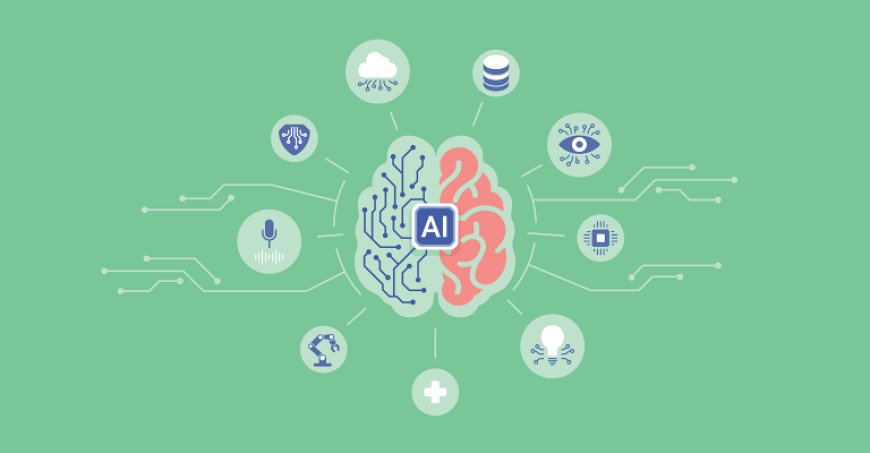
What Is Artificial Intelligence?
Artificial intelligence, commonly known as AI, is a field of technology focused on creating computer systems that can perform tasks that normally require human intelligence.
These tasks can include understanding language, recognizing images, identifying patterns, making predictions, solving problems, generating content, and supporting decision-making.
Artificial intelligence is already part of many everyday technologies. Search engines, recommendation systems, voice assistants, navigation applications, fraud detection systems, translation tools, and customer service platforms can all use AI in different ways.
Although artificial intelligence can perform increasingly complex tasks, it does not necessarily think or understand the world in exactly the same way humans do. Most AI systems are designed to process information and produce outputs based on patterns learned from data and predefined computational methods.
How Does Artificial Intelligence Work?
At a basic level, an AI system receives information, processes that information using algorithms and models, and produces an output.
For example, an image recognition system can receive a photograph as input and analyze its visual patterns. If the system has been trained to recognize certain objects, it may identify a car, person, animal, or other object in the image.
The quality of an AI system depends on several factors, including the data used for training, the design of the model, the computing resources available, and how effectively the system is evaluated.
Modern AI systems can process enormous amounts of information much faster than a person could manually analyze.
What Is Machine Learning?
Machine learning is one of the most important approaches used in artificial intelligence.
Instead of programming every possible rule manually, machine learning systems can learn patterns from data.
For example, imagine a system designed to identify spam emails. Developers could provide the system with many examples of spam and legitimate messages. A machine learning model can analyze patterns in those examples and learn characteristics that help distinguish unwanted messages from normal communication.
When the system receives a new email, it can use what it learned to estimate whether the message is likely to be spam.
Machine learning is used in areas such as recommendation systems, fraud detection, image recognition, forecasting, search engines, and many other applications.
What Are Neural Networks?
Neural networks are computational models inspired loosely by the way biological neural systems process information.
A neural network consists of interconnected computational units organized into layers. During training, the system adjusts internal parameters to improve its ability to produce the desired outputs.
Neural networks are particularly important for processing complex forms of information such as images, audio, and natural language.
Deep learning refers to machine learning approaches that use neural networks with multiple layers. Advances in computing power, data availability, and algorithms have helped deep learning become an important part of modern AI.
What Is Generative AI?
Generative AI is a category of artificial intelligence designed to create new content based on patterns learned during training.
Depending on the system, generative AI can produce text, images, audio, video, software code, and other forms of content.
Large language models are examples of generative AI systems that can process and generate natural-language text.
For example, a user can provide a question or instruction, and a language model can generate an answer based on patterns learned during training.
Generative AI is being explored for education, software development, marketing, research, customer support, content creation, and many other applications.
How Does AI Learn From Data?
Data plays a central role in many artificial intelligence systems.
During training, an AI model can process large datasets and identify statistical patterns. The model's internal parameters are adjusted repeatedly to improve its performance on a particular task.
Consider an image classification system. If the system is trained using thousands of labeled images, it can learn visual patterns associated with different categories.
The model does not simply memorize every photograph. Ideally, it learns general patterns that allow it to make predictions about images it has not previously encountered.
The quality and relevance of training data are therefore extremely important.
Training and Inference
AI systems generally involve two important stages: training and inference.
Training is the process in which a model learns patterns from data. This process can require substantial computing power, particularly for large modern AI models.
Inference occurs when the trained model is used to process new information and produce an output.
For example, when a user asks an AI system a question, the system performs inference to generate a response.
The distinction is important because building or training a model can require very different resources from simply using an already-trained model.
What Are AI Algorithms?
An algorithm is a set of instructions or computational procedures used to solve a problem or process information.
Artificial intelligence uses different types of algorithms depending on the task.
Some algorithms are designed for classification, while others are used for prediction, recommendation, optimization, language processing, or pattern recognition.
Modern AI systems can involve extremely complex combinations of algorithms, mathematical operations, data-processing techniques, and trained models.
Artificial Intelligence in Everyday Life
Many people interact with AI without necessarily realizing it.
AI can be found in:
- Search engine results
- Online product recommendations
- Streaming suggestions
- Smartphone voice assistants
- Navigation applications
- Email spam filters
- Online fraud detection
- Automatic translations
- Facial and image recognition
- Smart home systems
- Customer service platforms
For example, a streaming platform may analyze viewing behavior and recommend content that a user might enjoy.
A navigation application can process traffic information and suggest an alternative route.
These are practical examples of AI being integrated into everyday digital services.
Artificial Intelligence in Healthcare
Healthcare is an important area of AI research and application.
AI systems can assist with analyzing medical images, processing large datasets, supporting research, and identifying patterns that may be difficult to detect manually.
Machine learning can also be used in areas such as medical research, drug development, and health data analysis.
AI is intended to support healthcare professionals rather than replace professional medical judgment. Accuracy, privacy, validation, and human oversight are particularly important when technology is used in healthcare.
AI in Business
Businesses are increasingly using artificial intelligence to automate tasks and analyze information.
AI can help companies understand customer behavior, identify trends, automate customer support, detect potentially fraudulent transactions, and improve internal workflows.
For example, an online retailer can use machine learning to recommend products based on browsing or purchasing patterns.
Businesses can also use AI-powered tools to summarize documents, analyze large datasets, or assist employees with routine tasks.
AI and Automation
Artificial intelligence and automation are closely related but are not exactly the same.
Automation involves using technology to perform tasks with limited human intervention. Traditional automation can follow clearly defined rules.
AI can make automation more flexible by allowing systems to analyze information, recognize patterns, and make predictions.
For example, a simple automated system may send an email at a specific time. An AI-powered system could analyze customer behavior and determine when or what type of communication might be most appropriate.
Benefits of Artificial Intelligence
Artificial intelligence can provide several important benefits.
It can process large quantities of information quickly, automate repetitive activities, identify patterns, support decision-making, and provide personalized digital experiences.
AI can also help organizations work more efficiently.
For example, a company can use AI to analyze thousands of customer interactions instead of requiring employees to review every interaction manually.
When appropriately designed and implemented, AI can help people focus on tasks requiring creativity, judgment, communication, and problem-solving.
Challenges and Limitations of AI
Artificial intelligence also has important limitations.
An AI system can produce incorrect information, misunderstand context, or generate an answer that appears convincing but is inaccurate.
AI systems can also reflect problems present in their training data. If the data contains significant biases or limitations, the resulting model may reproduce or amplify them.
Other concerns include privacy, cybersecurity, intellectual property, transparency, employment changes, and the responsible use of automated decision-making.
For these reasons, AI systems should be evaluated carefully rather than treated as automatically correct.
Why Human Oversight Matters
Human judgment remains important when using artificial intelligence.
AI can analyze information quickly, but it does not eliminate the need for people to evaluate results.
In areas such as healthcare, finance, education, law, and public services, incorrect automated outputs can have serious consequences.
Human oversight can help identify errors, consider context, and ensure that technology is being used appropriately.
The most effective approach is often to combine the speed and analytical capabilities of AI with human experience and judgment.
The Future of Artificial Intelligence
Artificial intelligence is likely to become increasingly integrated into everyday technologies.
AI assistants may become more capable of handling complex tasks. Businesses may use AI more extensively for automation and analysis, while developers may incorporate AI features into a wider range of software products.
Robotics, autonomous systems, advanced language models, and multimodal AI could also create new applications.
However, technological progress should be accompanied by responsible development. Privacy, security, transparency, reliability, and human control will remain important as AI capabilities advance.
What's Your Reaction?
 Like
0
Like
0
 Dislike
0
Dislike
0
 Love
0
Love
0
 Funny
0
Funny
0
 Angry
0
Angry
0
 Sad
0
Sad
0
 Wow
0
Wow
0