How AI Is Changing the Future of Work
Discover how AI is changing the future of work by automating repetitive tasks, supporting employees, creating new job opportunities, and transforming workplace skills, productivity, and business operations.

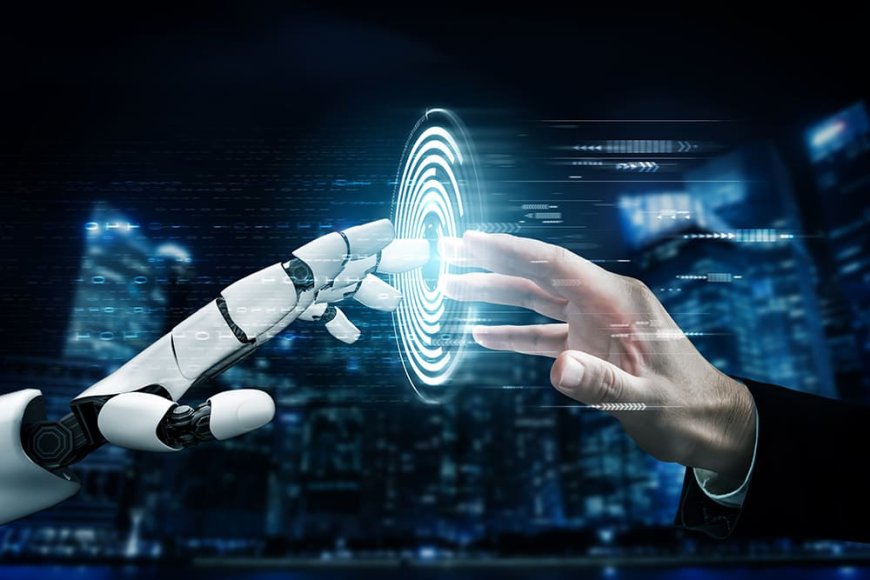
How AI Is Changing the Future of Work
Artificial intelligence is changing the way people work and how businesses organize their operations. From automated administrative tasks to AI-powered software development and customer service, artificial intelligence is becoming part of many modern workplaces.
For years, technology has helped employees work faster and communicate more effectively. AI takes this development further by allowing software to analyze information, recognize patterns, generate content, and assist with increasingly complex tasks.
The impact of AI on employment is often discussed in terms of jobs that could be automated. However, the future of work is more complicated than simple job replacement. AI can also create new roles, change existing responsibilities, and increase the value of skills that complement technology.
Understanding these changes can help both employees and businesses prepare for a rapidly evolving workplace.
AI and Workplace Automation
One of the most visible effects of artificial intelligence is automation.
Many employees spend part of their working day completing repetitive tasks. These can include entering information, organizing documents, responding to routine questions, preparing basic reports, or scheduling appointments.
AI can assist with many of these activities, allowing employees to focus more of their time on tasks that require creativity, communication, problem-solving, and decision-making.
For example, a customer service department can use AI to handle simple questions while human representatives concentrate on complicated customer issues.
AI Is Changing Existing Jobs
Artificial intelligence does not always eliminate an entire job. More often, it can change the tasks that make up a particular role.
An accountant, for example, may use AI to organize financial information and identify unusual transactions while spending more time interpreting results and advising clients.
A marketing professional can use AI to generate initial content ideas and analyze campaign data while focusing on brand strategy and creative decisions.
A software developer can use AI to assist with coding while concentrating more on system architecture, testing, and solving complex technical problems.
This means employees may increasingly work with AI rather than simply compete against it.
AI and Employee Productivity
AI can help employees complete certain tasks faster.
A worker may use an AI assistant to summarize a lengthy document, organize notes, draft an email, generate ideas, or find patterns in a dataset.
These capabilities can reduce the time spent on routine work.
However, productivity improvements depend on how AI is implemented. Poorly designed systems can create additional work, produce unreliable results, or require employees to spend time correcting AI-generated content.
The goal should therefore be to use AI where it genuinely improves a workflow.
New Jobs Created by Artificial Intelligence
While AI may automate some tasks, it can also create demand for new types of work.
Organizations may need professionals who can develop, manage, evaluate, and monitor AI systems.
Emerging and expanding roles can include:
- AI specialists
- Machine learning engineers
- Data professionals
- AI product managers
- AI governance specialists
- Automation specialists
- AI security professionals
- Technology consultants
Some existing roles are also likely to evolve as employees learn to incorporate AI into their daily responsibilities.
The Growing Importance of Digital Skills
As AI becomes more common, digital skills are becoming increasingly important across many industries.
Employees do not necessarily need to become programmers to work effectively with AI. However, they may need to understand how AI tools work, how to provide useful instructions, how to evaluate AI-generated information, and how to recognize potential errors.
Basic AI literacy can therefore become an important workplace skill.
Employees who understand both their professional field and the capabilities and limitations of AI may be particularly well positioned to adapt to changing job requirements.
Human Skills Will Become More Valuable
The growth of artificial intelligence may increase the importance of certain human skills rather than making them irrelevant.
Creativity, leadership, empathy, communication, critical thinking, collaboration, and strategic decision-making remain important in situations where context and human judgment matter.
For example, an AI system can generate several business ideas, but a human manager still needs to determine which idea fits the company's goals, customers, resources, and values.
The ability to evaluate information and make responsible decisions will remain essential.
AI and Remote Work
AI can also influence remote and hybrid work environments.
Employees working from different locations can use AI tools to summarize meetings, organize information, manage tasks, and support communication.
AI can help teams process large amounts of information without requiring every employee to attend every discussion or manually review every document.
As remote work continues to evolve, AI may become another layer of digital infrastructure supporting distributed teams.
AI in Different Industries
The effect of AI will not be the same across every industry.
Healthcare
AI can support medical professionals by analyzing information, assisting with medical imaging, and helping manage administrative processes.
Finance
Financial organizations can use AI for data analysis, fraud detection, customer support, and risk assessment.
Manufacturing
Manufacturers can use AI to monitor equipment, optimize production, and support quality control.
Retail
Retail companies can use AI for product recommendations, customer service, inventory management, and demand forecasting.
Education
Educational organizations can use AI to personalize learning, create educational materials, and assist teachers with certain tasks.
Technology
Technology companies are using AI for software development, cybersecurity, data analysis, and product development.
These examples show that AI is not limited to a single profession or sector.
The Importance of Reskilling and Upskilling
As workplace technology changes, employees may need to develop new skills.
Reskilling involves learning skills for a different role, while upskilling means improving skills within an existing career.
Companies can support employees by providing training programs that explain how AI tools can be used effectively and responsibly.
Employees can also benefit from developing skills that complement AI, such as data interpretation, communication, problem-solving, and strategic thinking.
Continuous learning may become increasingly important in a workplace where technology changes quickly.
AI and Business Decision-Making
AI can provide businesses with large amounts of information to support decision-making.
Companies can analyze sales data, customer behavior, market trends, operational information, and other datasets.
AI can identify patterns and generate predictions that may help managers evaluate different possibilities.
However, AI-generated recommendations should not automatically be treated as correct. Managers still need to consider business objectives, risks, market conditions, and information that may not be visible in the data.
Human judgment remains an essential part of effective decision-making.
Challenges of AI in the Workplace
The adoption of artificial intelligence also creates several challenges.
Job Displacement
Some tasks may become automated, reducing demand for certain types of work. This can create uncertainty for employees whose roles are heavily based on repetitive tasks.
Privacy
AI systems may process large amounts of workplace and customer information. Companies need appropriate policies to protect sensitive data.
Accuracy
AI can produce incorrect information. Employees need to verify important outputs before using them in professional situations.
Workplace Inequality
Not every employee or organization has equal access to advanced technology and training. Businesses need to consider how AI adoption may affect different groups of workers.
Employee Trust
Workers may be concerned about how AI is being used to monitor performance or evaluate employees. Clear communication and responsible policies are important for building trust.
How Companies Can Prepare for the Future
Businesses can prepare for AI-driven workplace changes by focusing on people as well as technology.
Rather than introducing AI simply because it is popular, organizations should identify specific problems that AI can solve.
Companies can then provide employees with appropriate training and establish clear rules around data, privacy, security, and responsible AI use.
It is also important to involve employees in the implementation process. Workers who understand why a new AI system is being introduced are more likely to use it effectively.
The Future of Work With AI
The future workplace is likely to involve closer cooperation between humans and artificial intelligence.
Employees may increasingly use AI assistants as part of their everyday workflows. Instead of spending hours completing repetitive tasks, workers may delegate some activities to automated systems and focus more heavily on creative and strategic responsibilities.
At the same time, some professions will change significantly, while others may grow as new technologies create additional demand.
The most important skill may not be knowing one specific AI tool. It may be the ability to learn, adapt, and understand how technology can be used to solve real problems.
What's Your Reaction?
 Like
0
Like
0
 Dislike
0
Dislike
0
 Love
0
Love
0
 Funny
0
Funny
0
 Angry
0
Angry
0
 Sad
0
Sad
0
 Wow
0
Wow
0