



Everyday Examples of Artificial Intelligence
Discover everyday examples of Artificial Intelligence, from smartphone assistants and search engines to online shopping, navigation, smart homes, healthcare, and digital security. Learn how AI works and how it makes daily life easier.

Everyday Examples of Artificial Intelligence
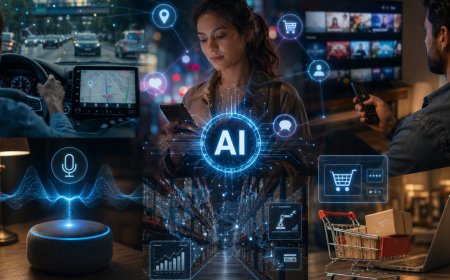
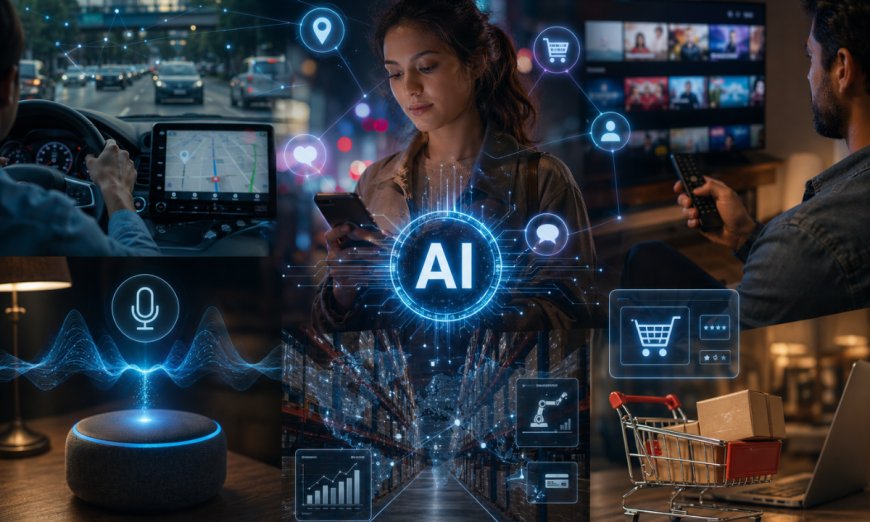
Artificial Intelligence (AI) has become an important part of everyday life, often working behind the scenes without people even noticing it. When someone unlocks a smartphone using facial recognition, receives personalized recommendations on a streaming platform, or follows the fastest route through a navigation application, AI may be involved.
These technologies help computers recognize patterns, interpret information, make predictions, and perform tasks that would otherwise require more manual effort. Some AI applications are highly visible, such as chatbots and virtual assistants, while others operate quietly within the digital services people use every day.
Understanding everyday examples of Artificial Intelligence helps explain how modern technology works and why AI is becoming increasingly important in communication, entertainment, shopping, transportation, education, and business.
1. AI Assistants on Smartphones
Smartphone assistants are among the most familiar examples of Artificial Intelligence.
Tools such as Siri and Google Assistant can help users set reminders, create calendar events, search for information, send messages, and perform other tasks using voice commands.
Modern AI assistants can use speech recognition to understand spoken words and language-processing technologies to interpret requests.
For example, someone might say, "Remind me to call the dentist tomorrow morning." The assistant can interpret the instruction and help create a reminder.
The exact capabilities depend on the assistant, device, settings, and available integrations. Some requests may require confirmation or additional information before an action can be completed.
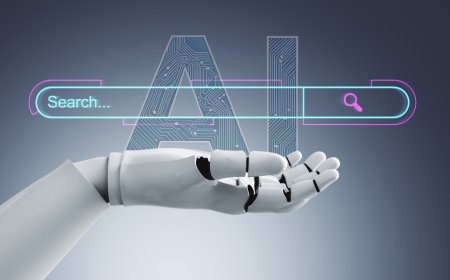
2. Search Engines and AI-Powered Search
Search engines help people find information on the internet, and AI plays an important role in many modern search systems.
When a person searches for a question, the system can analyze the query, identify relevant web pages, and rank results based on a range of signals. AI can also help interpret the meaning behind a question rather than relying exclusively on exact keyword matches.
For example, someone searching for "how to make my laptop battery last longer" may receive pages covering screen brightness, background applications, power settings, and battery health.
Some search experiences also use generative AI to summarize information or provide conversational answers.
These features can make research more convenient, but users should still verify important information against reliable sources.
3. Personalized Recommendations on Streaming Platforms
Streaming platforms frequently use AI and Machine Learning to recommend movies, television programs, music, and other content.
These systems can analyze signals such as viewing history, listening habits, ratings, and interactions to estimate what a user might enjoy.
For example, someone who regularly watches science documentaries may receive recommendations for similar programs or related subjects.
Recommendation systems can also help users discover content they might not otherwise find.
However, recommendations are predictions, not guarantees of personal preference. They can sometimes create repetitive viewing patterns or limit exposure to unfamiliar subjects.
4. Navigation and Traffic Predictions
Navigation applications use a combination of mapping data, traffic information, and predictive algorithms to help people travel more efficiently.
Services such as Google Maps and Waze can use available traffic information to estimate travel times and suggest alternative routes.
For example, if a road becomes congested, a navigation system may recommend another route that is expected to take less time.
AI-based predictions can help estimate traffic patterns and identify delays, although the accuracy of these estimates depends on data availability and changing road conditions.
Navigation applications can also support route planning for walking, cycling, and public transportation.
5. AI in Online Shopping
Artificial Intelligence has changed how people discover and purchase products online.
E-commerce platforms can use recommendation systems to suggest products based on browsing activity, previous purchases, product categories, and other available signals.
For example, a customer looking at a laptop might see recommendations for compatible accessories, carrying cases, or related devices.
AI can also support visual search, product categorization, customer service chatbots, and inventory forecasting.
These features can make online shopping more convenient by helping users find relevant products more quickly.
However, consumers should compare product specifications, prices, return policies, and independent reviews rather than relying entirely on personalized recommendations.
6. Email Spam Filters
Email spam filtering is another everyday application of AI.
Email services analyze messages to identify characteristics associated with spam, phishing, and other unwanted communications. Machine Learning models can learn from patterns in message content, sender behavior, links, and other signals.
For example, a system may flag an email containing suspicious links and misleading language instead of placing it in the main inbox.
Spam filters can reduce the time users spend dealing with unwanted messages and may help protect them from certain online threats.
Nevertheless, no filtering system is perfect. Some legitimate emails may be marked as spam, while some harmful messages may reach the inbox.
Users should remain cautious when opening unexpected attachments, clicking unfamiliar links, or responding to requests for sensitive information.
7. Facial Recognition and Smartphone Security
Many smartphones offer facial recognition or other biometric authentication features.
Depending on the device, these systems may use computer vision and specialized algorithms to analyze facial characteristics and compare them with previously enrolled information.
When a person attempts to unlock a device, the system evaluates whether the available biometric information matches the authorized user according to its security process.
Biometric authentication can make device access more convenient, but implementation and security vary between devices.
Users should understand their device's authentication options and consider the privacy implications of biometric data. For sensitive accounts, additional protections such as multi-factor authentication may also be appropriate.
8. AI in Smart Home Devices
Smart home technology can use AI to help manage lighting, temperature, entertainment, and other household functions.
Some systems learn from recurring patterns or use sensor information to automate specific actions. Others rely on schedules and predefined rules, so not every smart home feature necessarily uses AI.
For example, an intelligent thermostat may adjust heating or cooling based on occupancy patterns, environmental readings, or user preferences.
Smart speakers can also respond to voice commands and control compatible devices.
These technologies may improve convenience and energy management, although their benefits depend on the device, configuration, household habits, and local conditions.
Privacy and cybersecurity are important considerations because connected devices may collect information about household activities.
9. AI in Banking and Fraud Detection
Banks and financial service providers use AI and Machine Learning to analyze transactions and identify potentially suspicious activity.
A system may examine patterns such as transaction amounts, frequency, location information, and other signals to estimate whether a transaction requires further review.
For example, an unusual transaction that differs significantly from a customer's normal activity may trigger a security alert or additional verification.
AI can help financial institutions process large numbers of transactions quickly, but unusual activity does not automatically mean fraud.
Financial organizations need procedures for reviewing alerts, protecting customer information, and correcting mistakes that may inconvenience legitimate customers.
Consumers should also monitor their accounts, use strong authentication, and contact their financial institution through verified channels if they suspect fraud.
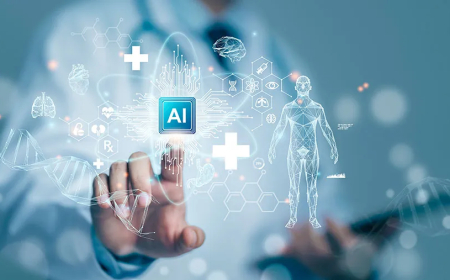
10. AI in Healthcare
Artificial Intelligence is increasingly used in healthcare research and selected clinical applications.
AI systems can assist with medical image analysis, research data processing, administrative tasks, and identifying patterns that may be relevant to patient care.
For example, an AI-assisted imaging tool may highlight an area that a qualified radiologist should examine more closely.
Healthcare researchers can also use AI to study large datasets and investigate possible relationships between treatments and outcomes.
These applications can support healthcare professionals, but they do not eliminate the need for clinical expertise, validation, and professional judgment.
AI-generated health information should not be treated as a substitute for appropriate medical advice, diagnosis, or treatment.
11. AI in Translation and Language Learning
Translation applications use AI to help people communicate across different languages.
Modern systems can translate sentences, recognize spoken language, generate subtitles, and assist with pronunciation or vocabulary practice.
For example, a traveler may use a translation application to understand a restaurant menu or communicate a basic request in an unfamiliar language.
AI-powered language-learning tools can also generate practice exercises, explain grammatical concepts, and provide feedback on written responses.
Although these applications can be useful, translations may lose cultural nuance, idiomatic meaning, or technical precision. Important legal, medical, or business documents may require qualified human review.
12. AI in Social Media Feeds
Social media platforms use recommendation and ranking systems to determine which posts, videos, and advertisements users see.
These systems may consider factors such as previous interactions, content topics, relationships, viewing behavior, and predicted relevance.
For example, someone who frequently watches cooking videos may see more food-related content in their feed.
AI can help platforms organize enormous amounts of content, but recommendation systems also influence what information people encounter.
Repeated exposure to similar topics can narrow the range of perspectives a person sees. Users can respond by adjusting recommendation settings, exploring different sources, and checking important claims before sharing them.
13. AI in Customer Service Chatbots
Many businesses use chatbots to answer common customer questions and direct people toward relevant information.
AI-powered chatbots can interpret natural-language questions and generate responses based on available information. Depending on the system, they may also help users track orders, understand product features, or navigate support processes.
For example, a customer asking about a company's return policy might receive an immediate explanation and a link to the relevant instructions.
Chatbots can reduce waiting times for routine inquiries, while human representatives remain important for complicated complaints, unusual circumstances, and sensitive issues.
Customers should be careful when sharing payment details, passwords, or other confidential information through unfamiliar chat services.
14. AI in Photography and Image Editing
AI-powered features are increasingly common in smartphone cameras and photo-editing applications.
Depending on the device and software, AI can help adjust exposure, reduce noise, recognize scenes, improve focus, remove unwanted objects, or create background effects.
For example, a smartphone may combine multiple exposures to produce a clearer image in low-light conditions.
Image-editing tools can also help users remove distracting objects or generate new visual elements.
These capabilities make photo editing more accessible, but generated or heavily edited images may not accurately represent real events. This distinction matters when images are used as evidence, in journalism, or in other contexts where authenticity is important.
15. AI in Education
AI tools can support students and teachers by providing explanations, practice questions, study summaries, and assistance with lesson preparation.
For example, a student learning a programming language might ask an AI assistant to explain an error message or demonstrate how a basic function works.
Teachers may use AI to draft worksheets, develop examples, or adapt learning materials for different levels.
The quality of the output depends on the system and the information provided. AI can misunderstand a question or give an incorrect explanation, so users should verify important information.
Students should also use these tools to develop their understanding rather than simply copying answers without learning the underlying concepts.
16. AI in Weather Forecasting
Weather forecasting combines observations, mathematical models, and increasingly AI-based techniques.
AI models can analyze large amounts of atmospheric data and identify patterns that help produce forecasts for certain tasks.
For example, predictive systems may help estimate rainfall patterns or identify possible developments in weather conditions.
AI does not replace all traditional forecasting methods. Meteorologists use multiple sources of evidence and forecasting tools to assess conditions and communicate uncertainty.
For everyday users, weather applications can make it easier to plan travel, outdoor activities, and other tasks. However, forecasts remain estimates, and severe weather warnings should always be taken seriously.
17. AI in Manufacturing and Product Quality
AI is also used behind the scenes to produce many everyday goods.
Manufacturers may use computer vision to inspect products for visible defects, Machine Learning to monitor equipment, and predictive systems to identify signs of possible machinery failure.
For example, an inspection system may examine images of manufactured components and flag items that appear to have cracks, incorrect dimensions, or surface defects.
This can help manufacturers identify problems earlier and reduce unnecessary waste.
The performance of these systems depends on the quality of their training data, inspection conditions, and maintenance. Human checks may still be necessary, especially for products where safety and reliability are critical.
18. AI in Music and Entertainment
AI can help organize music libraries, recommend songs, improve audio quality, and support music production.
Some tools can separate audio into different components, assist with noise reduction, or generate musical ideas based on user instructions.
For example, a creator might use an AI-assisted audio tool to remove background noise from a recording before editing it.
Music streaming platforms can also use recommendation systems to create personalized playlists.
Generative music tools introduce additional questions about originality, consent, copyright, and the appropriate use of existing recordings. Their output should be evaluated according to the intended purpose and applicable licensing conditions.
19. AI in Accessibility Tools
AI can make digital information easier to access for people with different needs.
Speech-to-text systems can turn spoken language into written text, while text-to-speech tools can read digital content aloud. Image-description systems may also help explain visual information to users who cannot easily see an image.
For example, automatic captions can help people follow online meetings, lectures, and videos.
These tools can support independence and participation, although they may make mistakes with accents, technical terminology, background noise, or complex images.
Improving accessibility requires testing these systems with diverse users and providing alternatives when automated features are unreliable.
20. AI in Personal Productivity
AI productivity tools can help people organize information, draft messages, summarize documents, and plan tasks.
For example, a worker preparing for a meeting might use AI to turn a collection of notes into an agenda and a list of questions.
A student might use an AI assistant to organize a study schedule around upcoming deadlines.
These applications can reduce the time spent on administrative tasks, but users should review the output for missing information and incorrect assumptions.
AI is most effective when it supports a clear goal rather than adding unnecessary steps to a simple task.
Benefits of Artificial Intelligence in Everyday Life
Everyday AI applications offer several potential advantages:
-
Convenience: Automates or simplifies selected digital tasks.
-
Speed: Helps process information and generate responses quickly.
-
Personalization: Provides recommendations based on available preferences and behavior.
-
Accessibility: Supports translation, transcription, captions, and other assistive features.
-
Efficiency: Helps businesses and individuals organize work and analyze information.
-
Safety support: Can help identify suspicious transactions, spam, or unusual activity.
These benefits vary by application. AI can make a process faster without necessarily making its results more accurate, fair, or secure.
The Risks of Using AI Every Day
AI also creates challenges that users should understand.
Privacy concerns: Some services collect or process personal information to provide their features.
Incorrect information: AI-generated answers and predictions may contain errors.
Bias: Models can produce unfair or unbalanced outcomes because of their data or design.
Security threats: AI can be misused to create convincing scams, phishing messages, or deceptive media.
Overdependence: Relying on AI for every decision can weaken independent judgment and problem-solving.
To use AI responsibly, people should protect sensitive information, verify important claims, review automated decisions, and understand the limitations of the tools they use.
Will Artificial Intelligence Become More Common in Daily Life?
AI is likely to become more integrated into everyday software, household devices, online services, and workplace tools.
Digital assistants may become better at coordinating tasks across different applications. Educational platforms may provide more adaptive learning experiences, while businesses may use AI to improve customer service and organize complex workflows.
However, adoption will depend on cost, reliability, privacy protections, public trust, and the practical value of each application.
Not every task needs AI, and some activities will continue to benefit from direct human involvement. The most useful applications will be those that solve genuine problems without introducing unnecessary complexity.
What's Your Reaction?
 Like
0
Like
0
 Dislike
0
Dislike
0
 Love
0
Love
0
 Funny
0
Funny
0
 Angry
0
Angry
0
 Sad
0
Sad
0
 Wow
0
Wow
0